A small family farm in Lyons, Colorado raising Coturnix quail, Khaki Campbell ducks, and dairy goats. Hatching eggs, fresh eating eggs, and chicks, raised by hand and sold local.
Every animal here has a name, the best feed we can buy, and someone keeping an eye on it. We farm small, we farm carefully, and we look after this land.
Coturnix quail mature fast, lay generously, and take up almost no space, which makes them one of the best small-farm birds going. We keep several color lines, each with its own look and its own egg.
And they do not crow. No rooster noise at five in the morning. Quail make soft chirps and little warbling calls, the kind of sound you have to stand close to hear. If your HOA has banned chickens, or you simply have neighbors you like, quail are very often the answer.
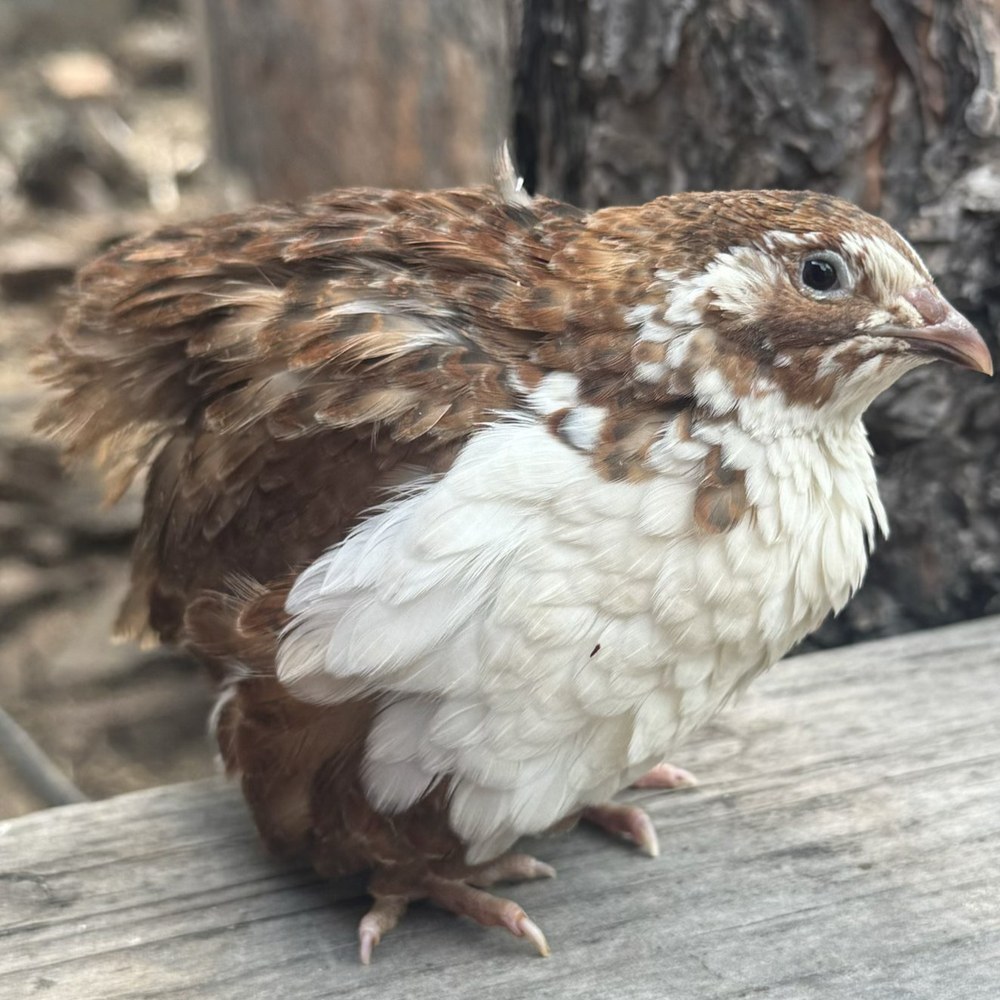
Coturnix japonica
The blue-egg line. A recessive gene turns the shell a soft robin's-egg blue instead of the usual speckled brown. Genuinely rare and the first thing anyone notices in a carton. The birds themselves are the muted gray-brown Range base, often with white across the throat or breast.
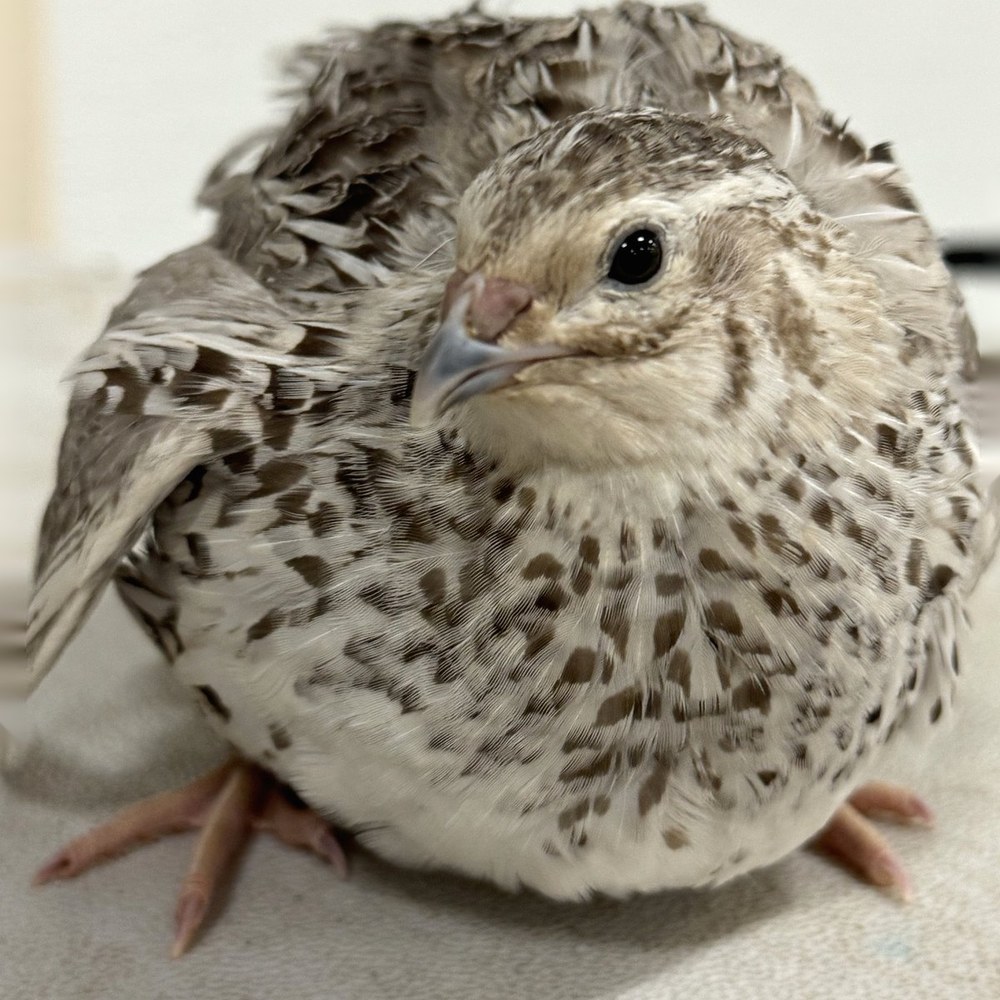
Coturnix japonica
Beautiful gradient tones of gray, black and white. Calm birds and steady layers, handled daily by the kids like everything else here. Cream eggs with brown speckles.
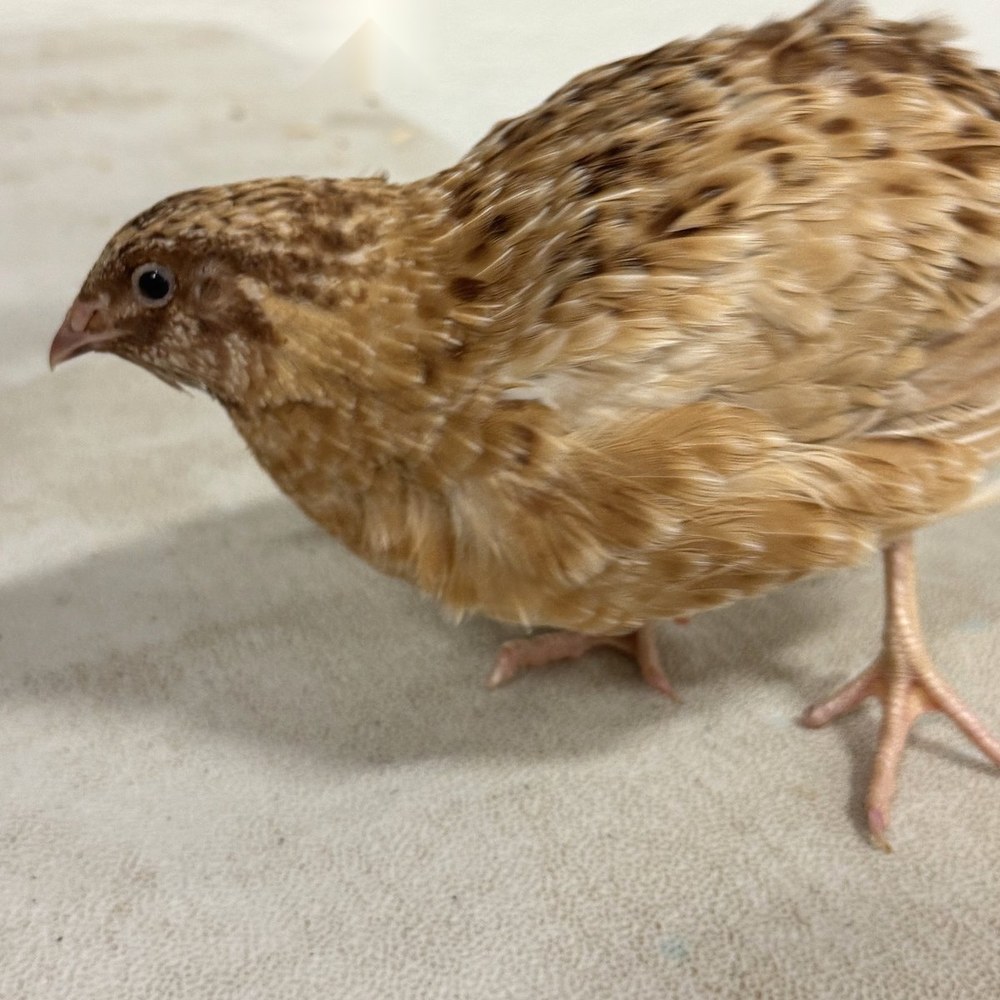
Coturnix japonica
A light amber-gold bird. Unlike our Range line, Autumn Ambers can be sexed on feather color once they are grown, which makes them a much friendlier bird for anyone new to quail who wants to know what they have.
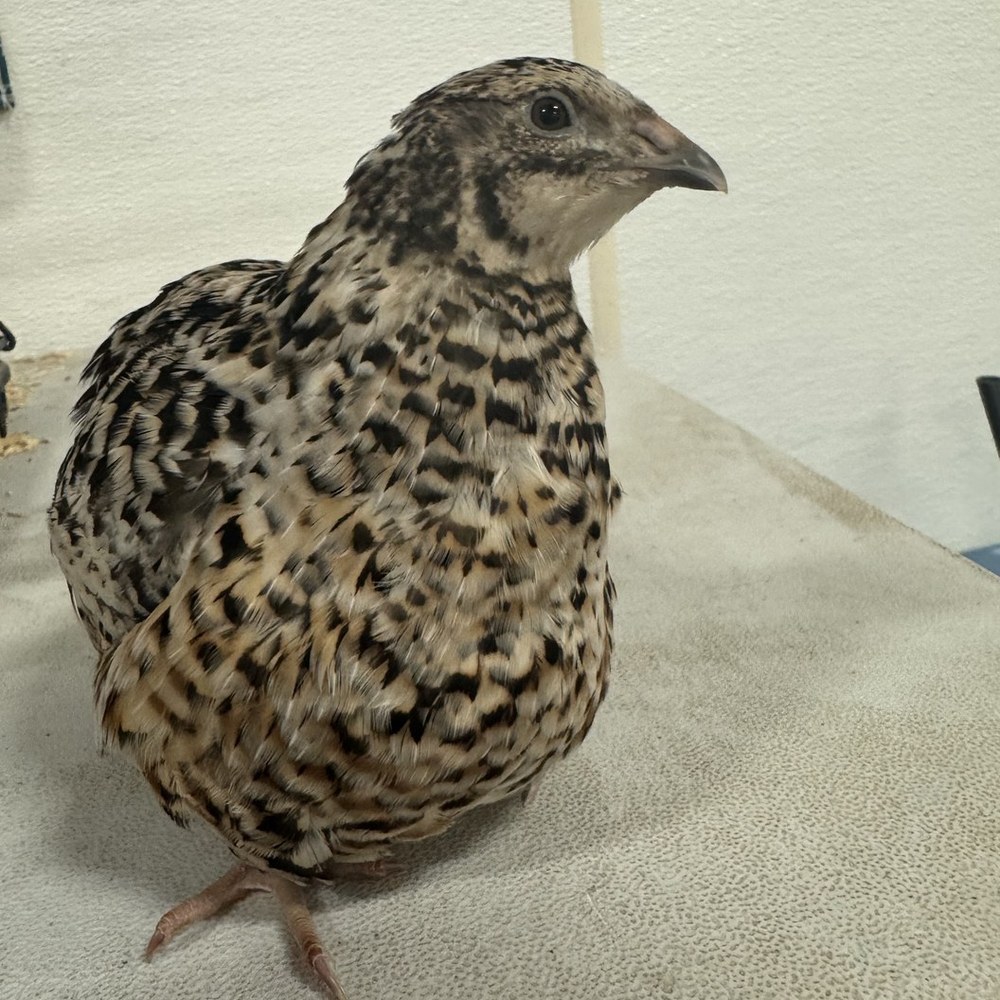
Coturnix japonica
Gold and white with black barring, the showiest bird in the yard, and the one visitors point at first. Cream eggs with brown speckles.
More lines in the pens than we have written up yet. Email us and we will tell you what is laying.
They're about a fifth the size of a chicken egg with a proportionally larger yolk, which makes them richer. Five quail eggs is roughly one chicken egg for cooking. People buy them for pickling, for ramen, for charcuterie boards, and for kids who think tiny food is the best food.
Quail also start laying at six to eight weeks, so a chick bought in spring is producing before summer is out.
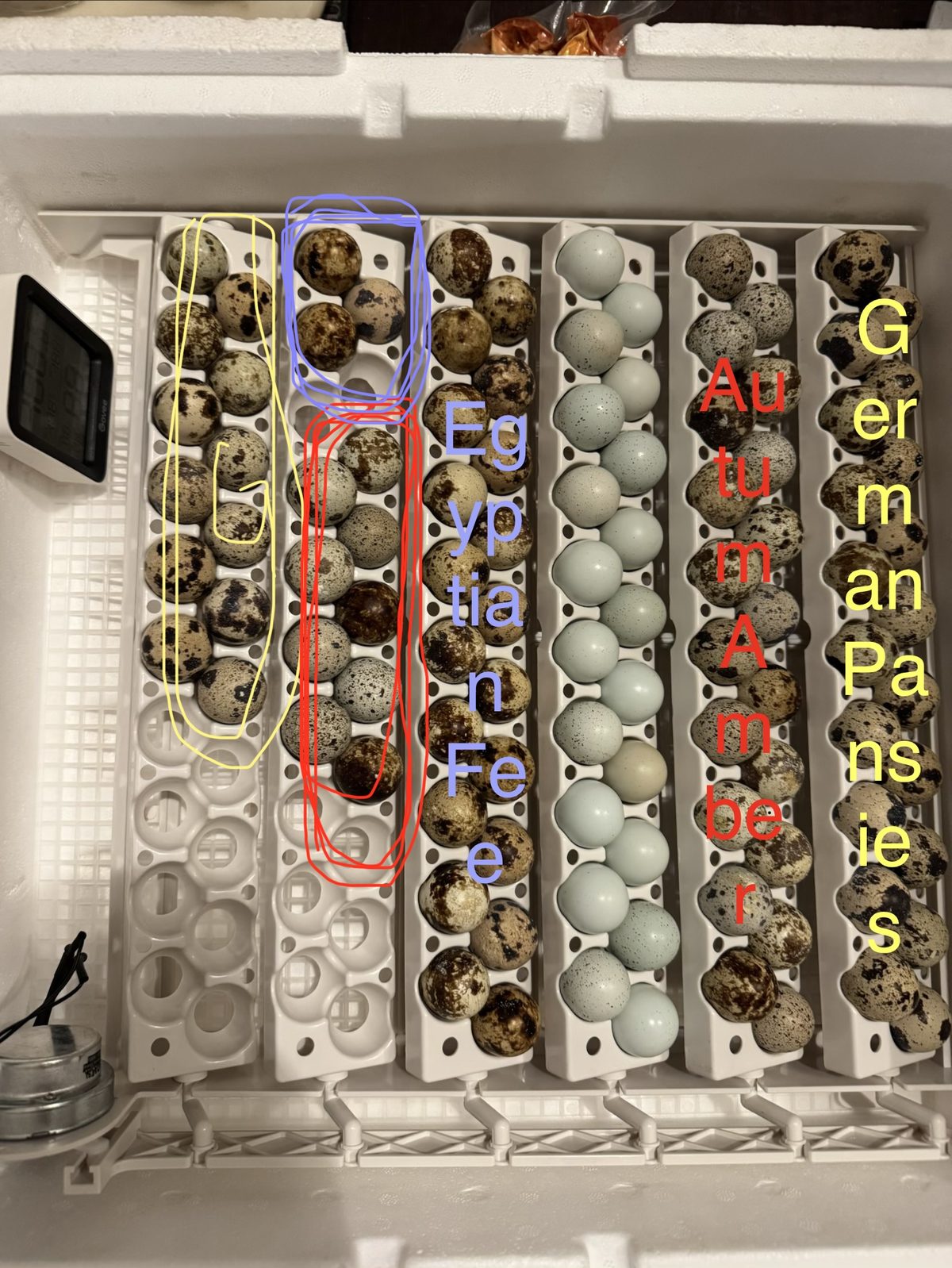
Setting eggs by variety. The pale row is celadon, the blue-egg line. Everything either side of it is a patterned brown layer.
Coturnix chicks go home at one to three days old, or grown on by us to one to three weeks. This is what they look like in that first two weeks, before the adult color comes in.
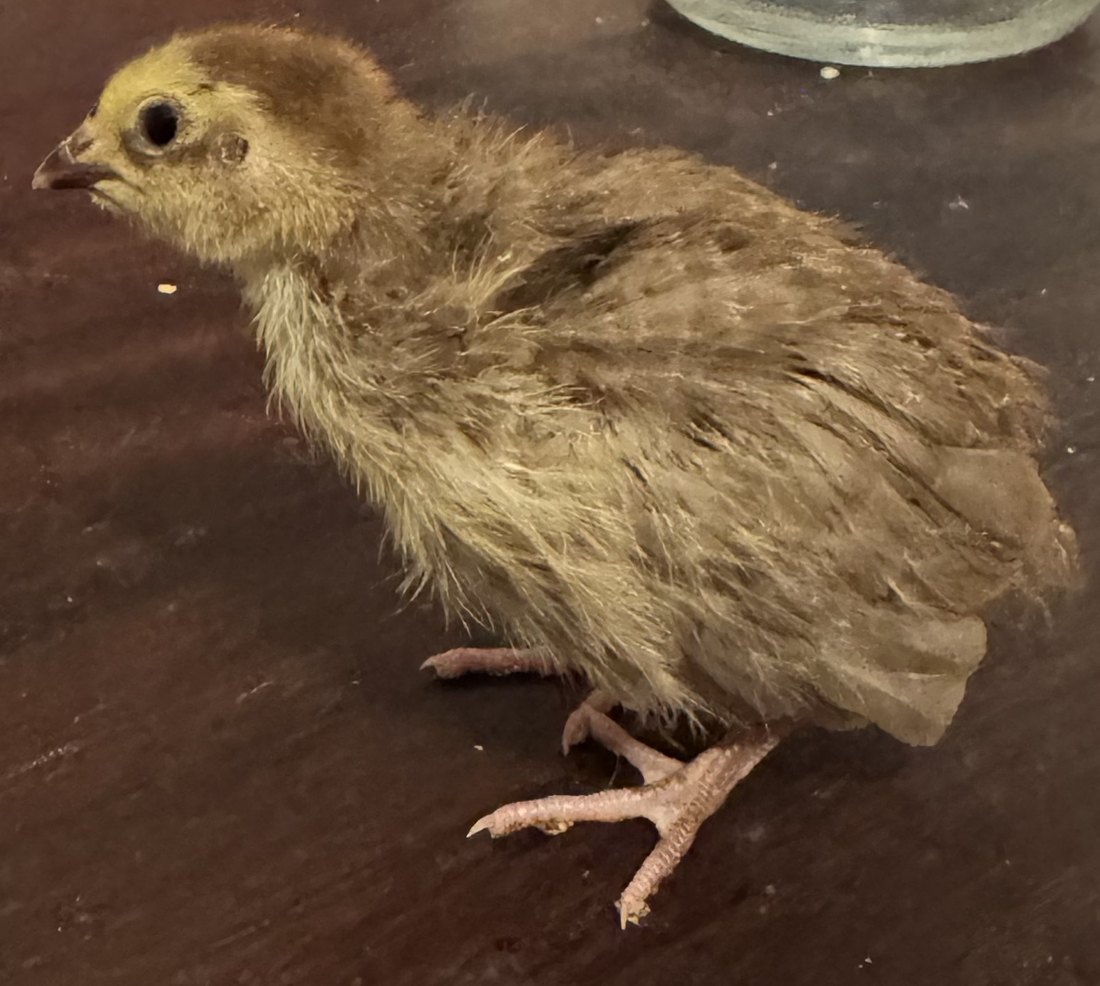
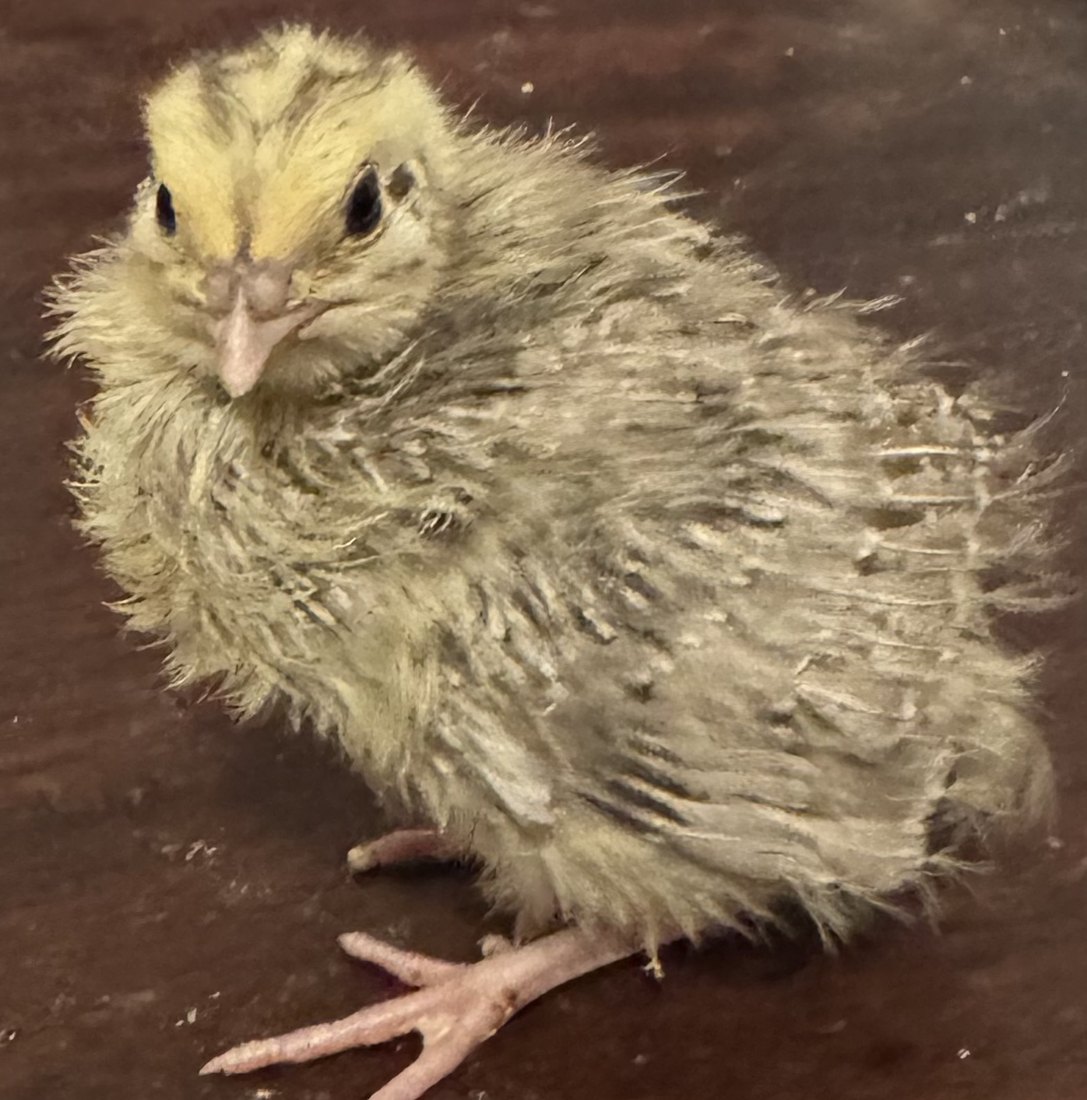
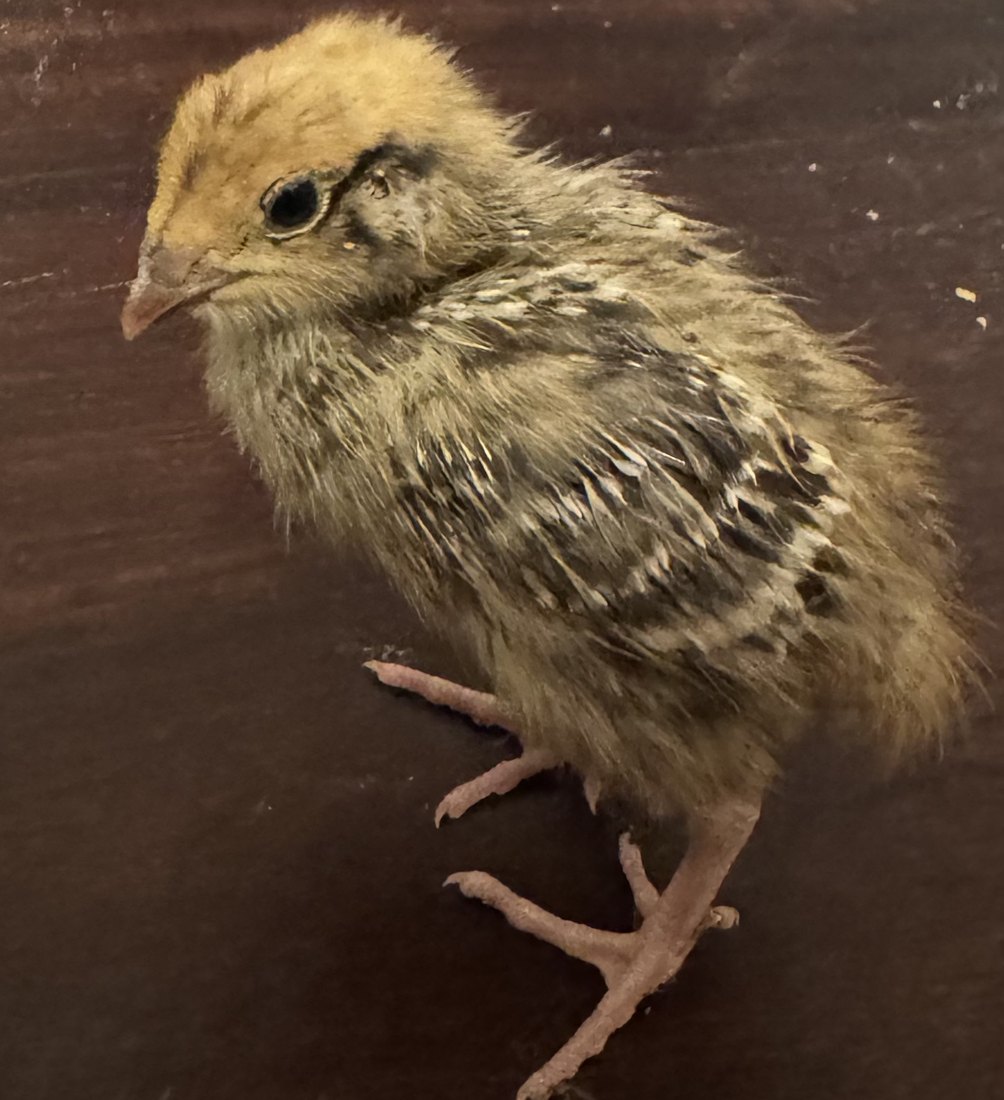
These are our own birds, photographed at home this summer, so you can see what the adult color actually looks like before you buy eggs or chicks. Chicks are sold straight run and we cannot promise a particular bird from a particular hatch.
Warm amber-gold birds with deep auburn accents across the back and shoulders and a plain buff chest with very little speckling. The gold reads warmer in daylight than it does on a screen.
Autumn Amber is a breeder line name, not a published gene. It describes a consistent, recognizable bird, but different breeders do not always mean exactly the same thing by it.
The high-contrast bird of the three. Gold and white with black barring and blotching, strongest across the back and flanks. No two are marked quite alike. Cream eggs with brown speckles.
German Pansy is also a breeder line name rather than a scientific designation.
Beautiful gradient tones of gray, black and white, with dark speckling down the breast and a light face. Cream eggs with brown speckles.
Egyptian is generally given by breeders as roux plus dilution on a wild-type base, and Fee is described as stripping the warm tone back further. Both are breeder convention. Neither has a published gene, locus or test that we have been able to read, so we list them as unpublished.
We keep the published genetics and the breeder naming separate everywhere on this site. If you want to see which is which, the evidence is laid out on Our Birds.
| Item | Price |
|---|---|
| Hatching eggs, mixed dozen Our choice of varieties, whatever is laying well that week. Collected fresh, never washed. | $15 / dz $30 / 24 eggs |
| Hatching eggs, variety specific Egyptian Fee, German Pansy or Autumn Amber, kept separate and sold as that variety. | $18 / dz $27 / 18 eggs |
| Hatching eggs, Range Celadon Both parents are proven celadon, so every one of these eggs carries two copies and the daughters will lay blue. Not feather-sexable at any age. | $20 / dz $40 / 24 eggs |
| Eating eggs Fresh table eggs by the dozen or the flat of 18. Spring through fall only, see the note on winter below. | $8 / dz $11 / flat of 18 |
| Day-old chicks, straight run Go home at one to three days old. Reserve ahead. We hatch to order, not to stock. | $6 ea Range Celadon $8 ea |
| Chicks, one to three weeks old Grown on by us through the fragile first weeks and sold still on heat. Straight run. | $8 ea Range Celadon $10 ea |
Every quail here has eaten 100% certified organic feed for its entire life. Our quail hatch on this farm and go straight onto a certified organic chick starter, then onto an organic grower ration once they are grown. Not one of them has ever eaten conventional feed, not for a day. That is a deliberate and more expensive choice and it is part of what you are paying for, whether you are buying eggs to eat or birds to breed.
Eggs are a spring through fall thing here. We let our birds go dormant over the winter and stop laying. It is what their bodies are asking to do, and we would rather give them the rest than push them through it. Laying picks back up in the spring. If you get in touch over the winter we will happily put you on the list for the new season, we just will not have eggs in hand to sell you.
One drake and two hens, all Khaki Campbell. All three were shown at the Boulder County Fair in August and all three placed: two blues and a red. The ducks are not for sale. What we sell is their eggs: hatching eggs if you want to raise your own, table eggs if you want to cook with them.
| Item | Price |
|---|---|
| Duck hatching eggs Khaki Campbell, fertile, collected fresh and never washed. Half dozen only. Very limited. See the note below. | $12 / half dz |
| Duck eating eggs Fresh table eggs. Bigger and richer than a chicken egg, and the reason bakers go looking for them. Half dozen only. | $8 / half dz |
Please read this before you order duck eggs. We have two duck hens. Between them that is roughly one and a half eggs a day, so a full dozen takes us more than a week to collect, and hatching eggs are at their best inside the first week to ten days. That is why duck eggs are sold by the half dozen only, table eggs and hatching eggs alike, and only when we are not selling those same eggs for the other purpose. Order ahead, expect to wait, and do not expect us to fill a big order quickly. We would rather tell you that now than take your money and disappoint you.
We keep a small laying flock alongside the quail and the ducks. The chickens are not shown and they are not for sale, but there are usually eggs going spare, and we would rather sell them to a neighbor than let them stack up in the fridge.
| Item | Price |
|---|---|
| Chicken eating eggs Fresh table eggs by the dozen, whatever the flock is laying that week. Spring through fall only. | $6 / dz |
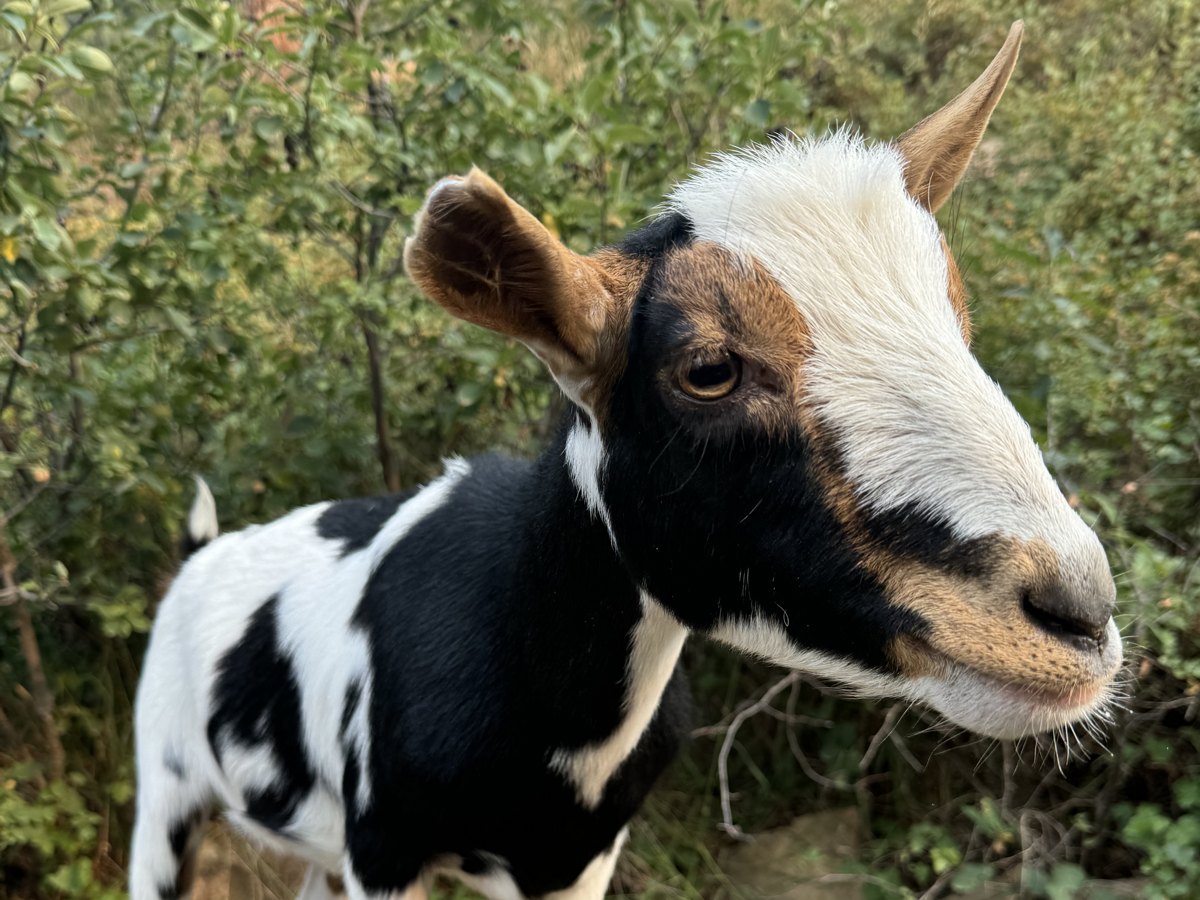
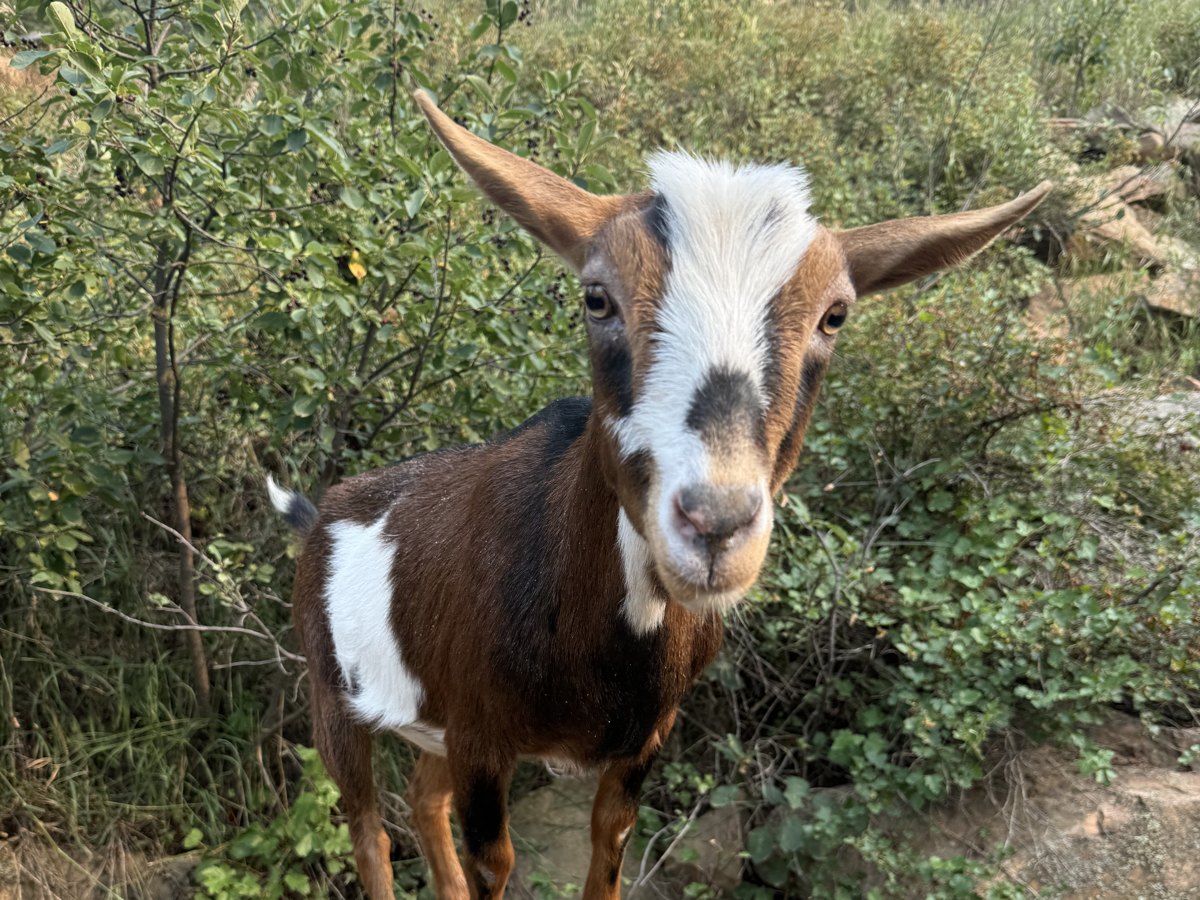
Two Nigerian Dwarf dairy goats, shown by our kids at the Boulder County Fair this year. They are not for sale, they have not been bred, and we are not milking them. They are family. We are telling you about them because they are half the reason anyone stops at our booth.
A small American dairy breed. Adults stand around knee height and weigh about seventy-five pounds, which is a large part of the appeal. They are a true dairy goat rather than a miniature pet breed, and they are known for being gentle, curious and extremely people-oriented.
Gelato is the black and white one. Talenti is brown and white with a white blaze down her face. Both of them behave more like dogs than livestock. They follow us around the property, come when they are called, and supervise everything anyone is trying to do outside.
We are in the foothills, where fire is the thing you think about every summer. The goats browse down the scrub oak and brush that builds up against the property, which is real fire mitigation and not a job either of them considers work.
Not for sale. Not bred. No milk, no kids, no herd shares, just two goats we like very much.
We have been on this land since 2010, and the way we keep animals has not changed much since then. Small numbers, close attention, and the best feed we can buy. Every bird and every goat here is handled by us daily, and most of them have names.
Every quail here has eaten 100% certified organic feed for its entire life, from the day it hatched. It costs us noticeably more than conventional feed. We think you can taste it, and we know the birds do better on it.
We hatch to order instead of keeping chicks in stock, so we are not raising birds nobody asked for. We sell local pickup only, which means no bird of ours ever spends a day in a shipping box. It makes us slower. It also means we know where they go.
We are in the foothills, where wildfire is the thing you think about every summer. The goats browse down the scrub oak and brush that builds up against the property, which is real fire mitigation done by two animals who consider it a good day out.
None of this makes us a big operation, and we are not trying to be one. It just means that when you buy an egg or a chick from us, you know exactly how it was raised and who raised it.
No account, no checkout, no shipping surprises. Four steps, and you do not pay until we have told you we actually have the birds.
Fill out the form. It takes about a minute. Scan a QR code from one of our cards or use the button below. This is a request, not a purchase. Nothing is reserved and nothing is owed yet.
We reply within 24 hours with what we can actually fill, your total, and a pickup date. If a hatch is smaller than expected, you hear it from us before any money changes hands.
Our confirmation email includes your total and payment details. Your order is reserved when the payment lands, not before. We will never ask you to pay from a link or a message you did not get from us directly.
Chicks and ducklings go home at one to three days old, once they are dry, fluffed and drinking. Eggs are ready whenever you are. Pickup at the Boulder County Fairgrounds in Longmont, or the Natural Grocers parking lot on North Main Street in Longmont.
Why we do it in that order. We hatch to order rather than keeping chicks in stock, and a hatch is never a guaranteed number. Eggs that look perfect can still fail. If we took your money first, we would be selling you birds that do not exist yet. So we take the request, wait until we know what we have, and only then ask you to pay. It means an extra email. It also means we have never once had to refund somebody for a chick that never hatched.
Set your eggs quickly. Hatching eggs are best set within about a week of being laid. We date every carton so you know exactly what you have.
The quail and ducks here are Colin's 4-H project. He and his sisters handle every bird almost daily, which is why they are calm to pick up rather than wild. He handles the daily feeding and watering, sets and turns the hatching eggs, keeps the hatch records, and does the selling. When you buy from Bear House Farm you're buying from him.
Place an OrderNo. Local pickup only. We are not shipping eggs or birds. Pickup is at the Boulder County Fairgrounds in Longmont, or the Natural Grocers parking lot on North Main Street in Longmont, whichever is easier for you. Saying this plainly saves everybody time: if you are not able to come and collect, we are not the right farm for you.
Under good conditions, quail hatching eggs commonly run 50–80% and duck eggs similar, but hatch rate depends heavily on your incubator, your handling, and how the eggs were handled. We guarantee the eggs are fresh and collected within 7 days of the date on your carton. We cannot guarantee a hatch rate, because the incubation is out of our hands entirely. Anyone who promises you a hatch percentage is overselling. One thing in your favor: because you are collecting these in person rather than having them shipped, they have not spent three days in a mail truck, which is the single most common reason hatching eggs fail.
Set them within 7 days of collection for the best results. Store them pointy-end down at around 55–65°F, out of the fridge, and tilt the carton once a day. Fertility drops off noticeably after about 10 days.
Yes for hatching eggs. We collect and label by pen. For chicks, tell us your preference and we'll do our best, but hatch results vary and we can't promise a specific count of a specific color.
Chicks are sold straight run, meaning unsexed. There is no way around this, and for our Range birds it does not get easier with age either. Range is built on the extended brown gene, which erases the plumage difference between cocks and hens, so Range birds cannot be feather-sexed at any age. They have to be vent-checked once mature. If somebody offers to sell you a sexed Range chick, they are guessing. Our patterned lines like Autumn Amber are a different matter and can be sexed on color once feathered.
No returns on live birds or on hatching eggs. Once an animal or an egg leaves our property we have no way of knowing how it was kept, and that is not a judgment about you. It is just the honest limit of what we can stand behind. What we will do: if an egg carton is cracked or a bird is not right at the moment you collect it, tell us there and then and we will replace it or refund it on the spot. Check your order before you leave.
Every quail here has eaten 100% certified organic feed for its entire life. An organic high-protein chick starter to begin with, and an organic grower ration once they are grown. They are kept in the yard rather than in a shed, and they are handled by Colin and his sisters almost every day, which is why the birds you meet sit still in your hand instead of thrashing.
No, and that is on purpose. We let our birds go dormant over the winter and stop laying rather than pushing them to keep producing. It is what their bodies are asking to do and they come back stronger for it in the spring. Eggs are a spring through fall thing here. If you get in touch over the winter we will happily put you on the list for the new season, we just will not have eggs in hand to sell you.
Not for free, and we would rather say so up front than be awkward about it later. If you cannot collect within three days, you can reserve birds with a deposit of half the price. That deposit is non-refundable and it comes off your balance at pickup. Birds still here after your pickup date board at $3 per bird, per week, which covers their feed and care while they wait. If we do not hear from you for a week past the pickup date, we keep the deposit and the bird goes back up for sale. The full policy is on the order page. None of this is meant to be harsh. It just costs real money to keep a bird that somebody has stopped answering about.